


A Guide to Prepaid Lease Solar Financing
Residential solar is about to change because the federal solar tax credit ends for homeowners on December 31, 2025. This means the 30 percent savings that made solar more affordable for years will no longer be available. If you've been considering solar, that's probably already on your radar, and now you're wondering: is there still a cost-effective way to get solar panels once the tax credit disappears?
The short answer is yes, but the path is different.
A prepaid solar lease is one of the newer options that will help Californians save on solar. It uses a commercial tax credit structure to apply savings upfront, rather than asking homeowners to claim them later through their taxes.
This guide explains how a prepaid solar lease works, who it’s a good fit for, and what to expect if you’re considering this option for your home.
What Is a Prepaid Solar Lease?
For years, most homeowners went solar the same way. You purchased the system, either by paying cash or financing it, and then, if you qualified, you'd claim the 30% federal solar tax credit on your tax return the following year. If your system cost $50,000, you'd pay that amount to your installer, and then receive $15,000 back as a tax credit. No matter how you paid, whether the whole amount upfront or financed with a loan, that tax credit lowered the total cost of going solar.
This made solar accessible to millions of Americans and was a major driver of residential solar growth across the country for decades.
A prepaid solar lease shifts this familiar setup. Instead of you claiming the tax credit yourself after installation, a solar financing company steps in to capture the commercial tax benefits that are still available to businesses. They pass those savings to you immediately as an upfront discount on your system price.
In simple terms, you make a one-time payment for long-term access to the solar energy produced on your home. There’s no waiting until the next tax season and no tax forms to file. The savings are built into the price from the start.
What Is Citadel's Prepaid Solar Option?
Citadel Roofing & Solar introduced this prepaid solar option to give homeowners a simpler way to capture upfront solar savings as incentives change.
With Citadel’s newest prepaid solar option, a third-party solar financing provider (our partner Participate Energy) owns the system, while Citadel handles the design and installation using our in-house teams. We manage the permitting process and build each system to meet local codes and quality standards.
Once the system is installed and turned on, it begins generating clean energy for your home. Ongoing maintenance and equipment repairs are handled by the system owner, so you don’t need to manage service issues yourself.
Instead of you claiming the tax credit yourself after installation, Participate Energy purchases the system, claims the commercial tax credit, and passes those savings to you immediately as an upfront discount.
From installation day on, the system powers your home the same way any residential solar system would. Citadel handles the installation and backs the work with our standard warranties, while Participate Energy holds the system title. This partnership structure allows most people to access similar solar savings that the residential tax credit provided, even after it's no longer available to individual homeowners.
How It Works: Step-by-Step
It's not much different than how solar used to work, but here's what you can expect with our prepaid solar lease solution:
1. Your Custom Solar Design
Citadel starts by evaluating your home and energy needs. We design a custom solar system and provide a proposal that shows your system size, expected production, and the prepaid price with savings applied upfront.
2. How You Pay
The prepaid amount is paid upfront. You can pay with cash or use a loan from a solar lender or another approved local lender if you prefer to spread out the cost.
3. System Install
While Citadel installs your system, Participate Energy handles the paperwork on the financing side. They own the system, which allows them to claim the commercial solar tax credit and apply those savings to your system price upfront.
4. Participate Energy Claims the Tax Benefits
While Citadel installs your system, Participate Energy handles the paperwork on the financing side. They technically own the system which allows them to claim the commercial tax credit.
5. Your System Powers Your Home
From day one, the system powers your home the same way any residential solar system would. The solar panels generate electricity for your home, and you see the savings on your utility bills. Participate Energy holds the system title on paper, but it doesn’t change how the system performs or how you use it day to day.
5. Maintenance & Monitoring
Ongoing system maintenance and equipment repairs are handled by the system owner, so you don’t need to manage service issues yourself. You’ll have access to system monitoring tools that let you track performance and production over time.
6. Warranties
Your system is covered by standard manufacturer warranties, including long-term coverage on solar panels and inverters, along with Citadel’s workmanship warranty. These protections work the same way they do with any residential solar installation.
7. Ownership
The agreement includes optional opportunities to purchase the system in the future. After six years, you'll have the option to purchase the system and take full legal ownership. Any buyout is optional and based on the Fair Market Value, which will likely be a small amount or $0. At that point, the system is entirely yours with no strings attached.
Why Prepaid Leases Make Sense Today
The end of the residential tax credit changes the math for homeowners, but solar is still a valuable investment that lasts for decades. A prepaid solar lease offers a way to capture upfront savings without needing to claim a tax credit yourself or navigate tax paperwork. This also makes solar more accessible to homeowners who couldn't benefit from the tax credit before. If your tax liability wasn’t high enough or if waiting until refund season didn’t work with your budget, this prepaid option removes those obstacles.
At the same time, utility rates in California continue to rise. Locking in a lower system cost now helps protect you from long-term electricity price increases.
For many homeowners, this structure removes the biggest barriers to going solar. There are no tax forms to manage, no concerns about qualifying for incentives, and no responsibility for system maintenance or repairs. Instead, you get a simpler structure that delivers clean energy and savings over time, even as incentives change.
Pros & Cons
Advantages of a Prepaid Solar Solution
Immediate Upfront Savings
You don't wait until next tax season to see your savings. The discount is applied to your system price from day one. If you were planning to claim the residential tax credit, this delivers comparable savings, just structured differently.
You Can Still Finance
Many homeowners prefer to finance rather than pay cash up front, and that option remains available with prepaid solar.
No Tax Paperwork
You don't file anything with the IRS or navigate tax credit forms. Participate Energy, or the solar financing company that owns the system, handles the commercial tax credit filing.
Accessible to More Homeowners
Not everyone could take full advantage of the residential tax credit. Maybe you didn't owe enough in taxes to claim the entire 30%, or you needed a more predictable payment structure. With this option, the discount applies regardless of your tax situation.
Maintenance and Repairs Included
Because the system is owned by a third-party provider, ongoing maintenance and equipment repairs are handled for you, rather than being your responsibility.
Considerations
No Performance Guarantee Included
Standard manufacturer and workmanship warranties apply, but there's no guarantee of specific energy production levels like there are in some PPA contracts.
Long Term Agreement
You're entering into a 25-year agreement with Participate Energy, although ownership can be transferred after six years at no additional cost.
Comparing Solar Financing Options
To understand what makes prepaid financing different (and the same), it helps to see how it compares to the ways people have paid for solar:
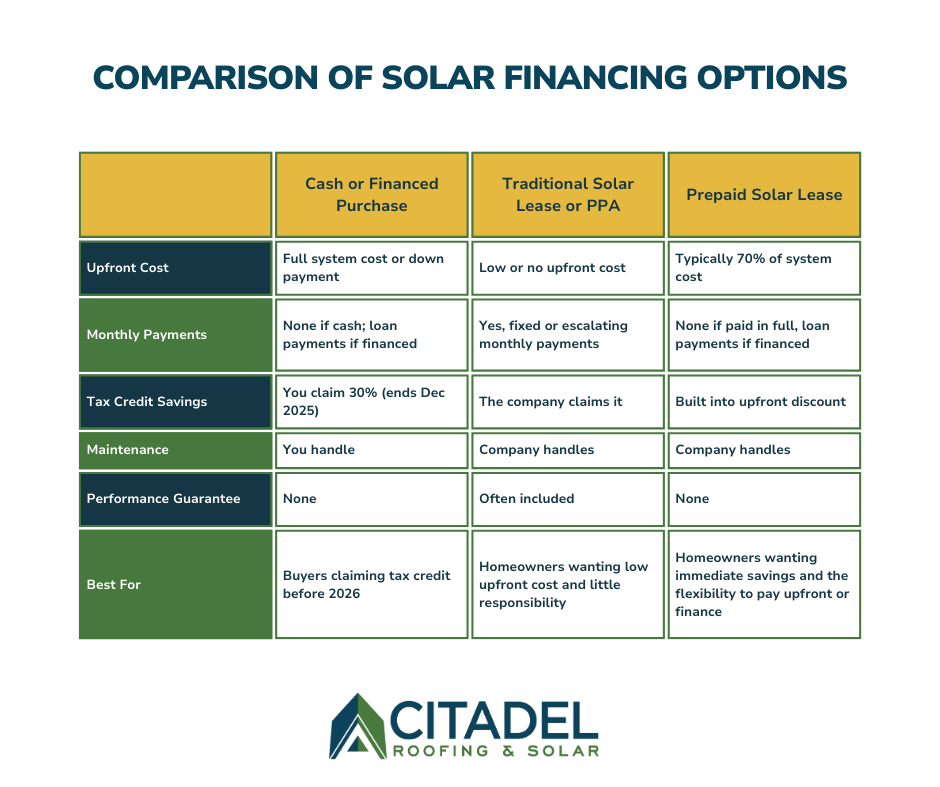
We have a few posts comparing the different ways to go solar if you want to get an even deeper understanding of the options. Check out our guides on understanding solar PPAs and how to pay for solar panels.
FAQs
-
What is the Participate Energy Prepaid Solar Program?
- One upfront payment (no monthly solar payment)
- No loan requirement, interest, or lien if paying cash
- System ownership and maintenance responsibilities remain with Participate Energy
- Simple structure designed for long-term predictability
- Can I use financing to pay for the prepaid amount?
- Cash, or
- A loan from a solar lender or another approved lender
- Flexibility to choose cash or financing
- Ability to structure payments based on household budget
- Do I own the solar system?
- No system ownership responsibilities
- No need to manage day-to-day system upkeep as the owner
- Is there a path to ownership later?
- Beginning after year 6 (and annually on the system anniversary thereafter), and
- At the end of the 25-year term
- Flexibility to consider ownership later
- No obligation to buy
- How is fair market value determined?
- Ability to review the buyout price when the time comes
- No upfront commitment to ownership terms
- Who manages maintenance, repairs, and warranty issues?
- Providing the monitoring platform
- Coordinating service and repairs when needed
- Coordinating manufacturer warranty replacements when applicable
-
A simplified service experience compared to ownership
-
Reduced responsibility for coordinating service and warranty claims
How to Get Started
Going solar after the end of the residential tax credit may feel more complicated than it used to, but prepaid financing brings you back to the same place: meaningful upfront savings. You are not missing out on the benefits that made solar attractive for years. They are simply structured differently now, with the discount applied at the beginning instead of being claimed later through your taxes.
Because this is a newer solar option, working with a company that understands how it works matters. Citadel Roofing & Solar, we've spent over 20 years working with California homeowners, and we’ve guided people through plenty of industry changes. This is one of the biggest shifts we’ve seen, and when you're exploring your options, you need clear explanations that make the decision feel manageable. Our job is to walk you through those options and help you choose what fits your home, your budget, and your long-term goals.
Our customers appreciate that we're upfront about costs, realistic about timelines, and the fact that we’re still here long after installation. Thanks to our customers and our expert team, we’re ranked as one of the top solar installers in the country.
If a prepaid lease sounds interesting but you still have questions, or if you're not sure how it compares to taking out a loan, we can talk through it. Schedule a free consultation with our team. We'll look at your roof, your energy usage, and your budget, and help find a solution for you.