

What to Know Before Installing Solar
2.3 gigawatts of new commercial solar capacity were installed across the U.S. in 2025, a record year for the segment. California accounted for 39% of national commercial installations. Businesses across California are increasingly exploring ways to manage rising electricity costs, generate power onsite, and make use of available roof space. For many, solar energy offers a practical way to pursue those goals.
There’s one thing you need to consider before installing solar that many business owners overlook: Can your roof safely support a solar system?
Can My Commercial Roof Support Solar Panels?
Many commercial roofs can accommodate solar panels, but not every roof is ready for the additional weight. We recommend a structural evaluation to determine if the existing roof has enough capacity for the planned solar system and identify any repairs or modifications needed before installation. There are several key factors that a structural engineer evaluates to determine whether your roof is ready for a solar system:
- Existing roof framing, including beams, joists, trusses, and supporting columns.
- Current roof materials, insulation, HVAC equipment, and other permanent loads.
- Proposed solar equipment, mounting method, and how weight will transfer into the structure.
- Local snow, wind, and seismic conditions, where applicable.
- Roof age and remaining service life, especially if replacement may be needed soon.
Structural capacity and roof condition are separate considerations. A roof may be structurally adequate but still need repairs or replacement before a solar system can be safely installed.
How Much Weight Does Solar Add to Your Roof?
Solar equipment adds permanent weight that remains on the roof. This is known as "dead load." The total added weight includes more than just the panels themselves. The mounting hardware, ballast, and electrical equipment also contribute to the system's overall load.
Panel weight: Solar modules vary in weight based on their size, construction, and manufacturer. Total panel weight depends on the number of modules required.
Racking and mounting hardware:This includes rails, clamps, brackets, support frames, and other hardware that secures panels to the roof.
Ballast (if applicable): Ballasted systems use weights (often concrete blocks) to hold panels in place without adding roof penetrations. Ballast can add substantial weight beyond panels and racking.
Electrical equipment and conduit: While less substantial than racking or ballast, inverters, wiring, conduit, disconnects and other equipment installed on or supported by the roof all add weight.
It’s important to keep in mind that this weight isn’t necessarily distributed uniformly. Mounting points, ballast, and rooftop equipment can create concentrated loads in specific areas, making weight distribution an important part of the structural evaluation.
Solar Isn’t the Only Load to Consider
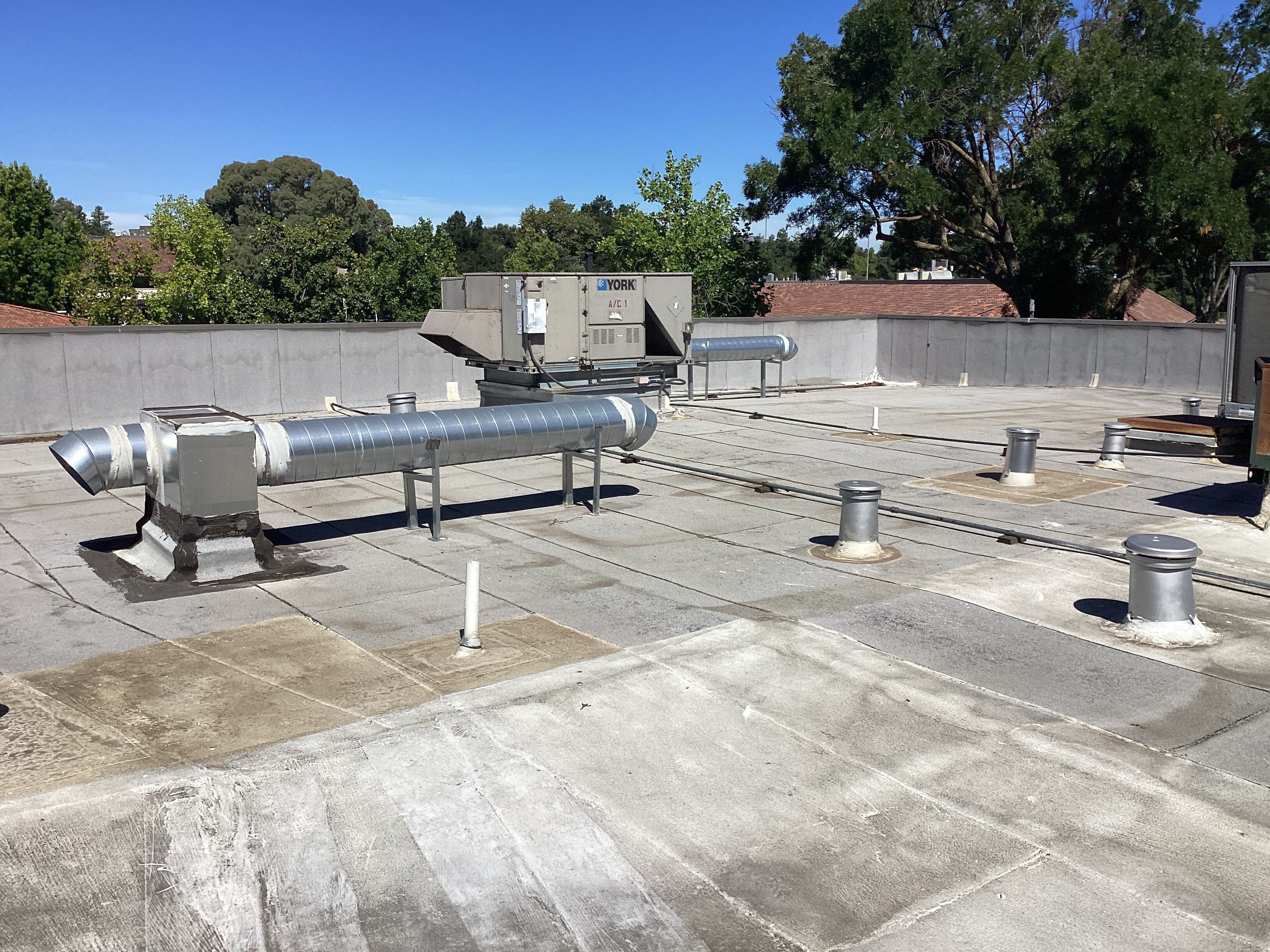
Solar equipment is not the only weight your roof and its supports will be carrying. Here are some other things to consider when evaluating roof strength and structure:
Dead loads: The existing roof assembly, insulation, mechanical equipment, and other permanently installed materials, in addition to the proposed solar system.
Live loads: Temporary or movable loads, such as maintenance workers and equipment, as required by applicable building codes. Specific access pathways and spaces around rooftop equipment may require different live-load requirements than areas occupied by solar panels.
Snow and wind loads: Snow adds considerable weight. This weight can be uneven as snow drifts around rooftop obstructions such as solar equipment. Panels and mounting systems must also withstand wind forces, including uplift and lateral forces.
In addition to roof and equipment weight, the engineer’s calculations will be affected by all these factors, plus panel arrangement, roof height, building exposure, and local weather conditions.
Understanding Commercial Roof Load Capacity
The type of roof protecting your commercial building is an important consideration, but several other factors determine how much solar equipment it can support. Broadly, commercial roof capacity depends on the building’s structural design, materials, framing, and supporting structure.
For example, metal roofing is common on California commercial and industrial buildings. The underlying structural framing, roof panels, seams, and attachment points all matter when selecting a mounting approach. Some metal roof systems support seam-mounted attachments that may avoid unnecessary penetrations, but compatibility with the specific roof design and manufacturer requirements must be confirmed.

California’s Building Standards Code includes requirements addressing structural design, roof loads, and rooftop solar installations. The applicable code edition and local permitting requirements should be confirmed for the project location and installation date.
What if Your Roof Needs a Little Help?
Don’t be discouraged if the initial assessment suggests that your roof isn't sufficient to achieve your solar goals. There are potential solutions:
Reduce the solar system’s weight: consider lighter panels, mounting hardware, or other equipment. If the original design exceeds available capacity, reevaluate the system size.
Change the mounting or attachment approach: Compare attached or ballasted systems based on structural demands, roof construction, and installation requirements.
Redistribute loads: Adjust panel placement or mounting locations to avoid overloading specific roof areas.
Replace or reinforce structural components: If an engineer determines reinforcement is feasible, strengthen roof framing, beams, or other supporting elements.
Consider a different location for some or all of the solar array: Explore ground-mounted systems, solar carports, or other suitable areas when rooftop capacity is limited.
Your Solar Plans Start with Your Roof
Evaluating roof load capacity early helps commercial property owners understand their options before committing to a solar design. Contact Citadel Roofing & Solar to discuss your commercial property, roofing needs, and potential solar installation.